Get Started
Run Your Entire Operation Through One System
Discover how FCX can replace fragmented systems with one intelligent operating system built for transport and logistics.
A fully integrated enterprise operating system connecting jobs, operations, fleet, drivers, warehousing, customers, subcontractors, workforce, safety, compliance and financial performance into one unified system.
FCX is built to eliminate the chaos of fragmented systems. In many transport and logistics businesses, dispatch, compliance, warehouse activity, fleet maintenance, customer communication and reporting all sit in separate tools. This creates duplication, delays, manual workarounds and reduced visibility.
FCX replaces those disconnected environments with one enterprise operating system. It manages end-to-end operations across transport, logistics and warehousing, bringing together operations and dispatch, fleet and asset management, workforce and safety, customers and subcontractors, warehousing and logistics, compliance and risk, and financial and operational intelligence into one connected ecosystem.
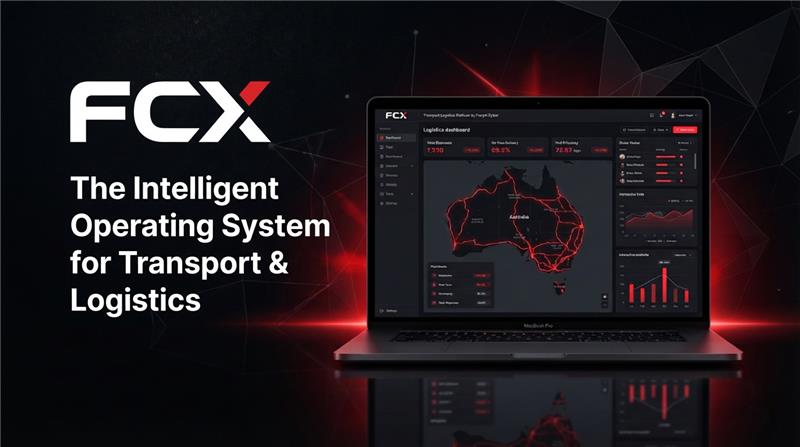
FCX operates through three connected environments that work together as one enterprise operating system.
The web-based enterprise operating system used by management, operations, dispatch, compliance, warehouse teams, workshop teams and customer-facing staff. The primary command centre for the business, providing control, visibility, reporting and operational oversight across the entire organisation.
The mobile driver application used by drivers and frontline workers. Supports job execution, route compliance, fatigue management, inspections, proof of delivery, safety reporting, communication and navigation in the field.
Explore FCX DriveThe AI and machine learning engine embedded across the operating system. Continuously analyses operational data and delivers insights within the workflow where decisions are made, not in a disconnected reporting tool.
Explore FCX IntelligenceFCX delivers a complete enterprise operating system for transport and logistics businesses. All capabilities are connected inside one system, ensuring that information flows across the entire business without fragmentation.
Each module manages a critical operational function. The real value of FCX comes from the fact that these modules share data, workflows and intelligence across one connected system.
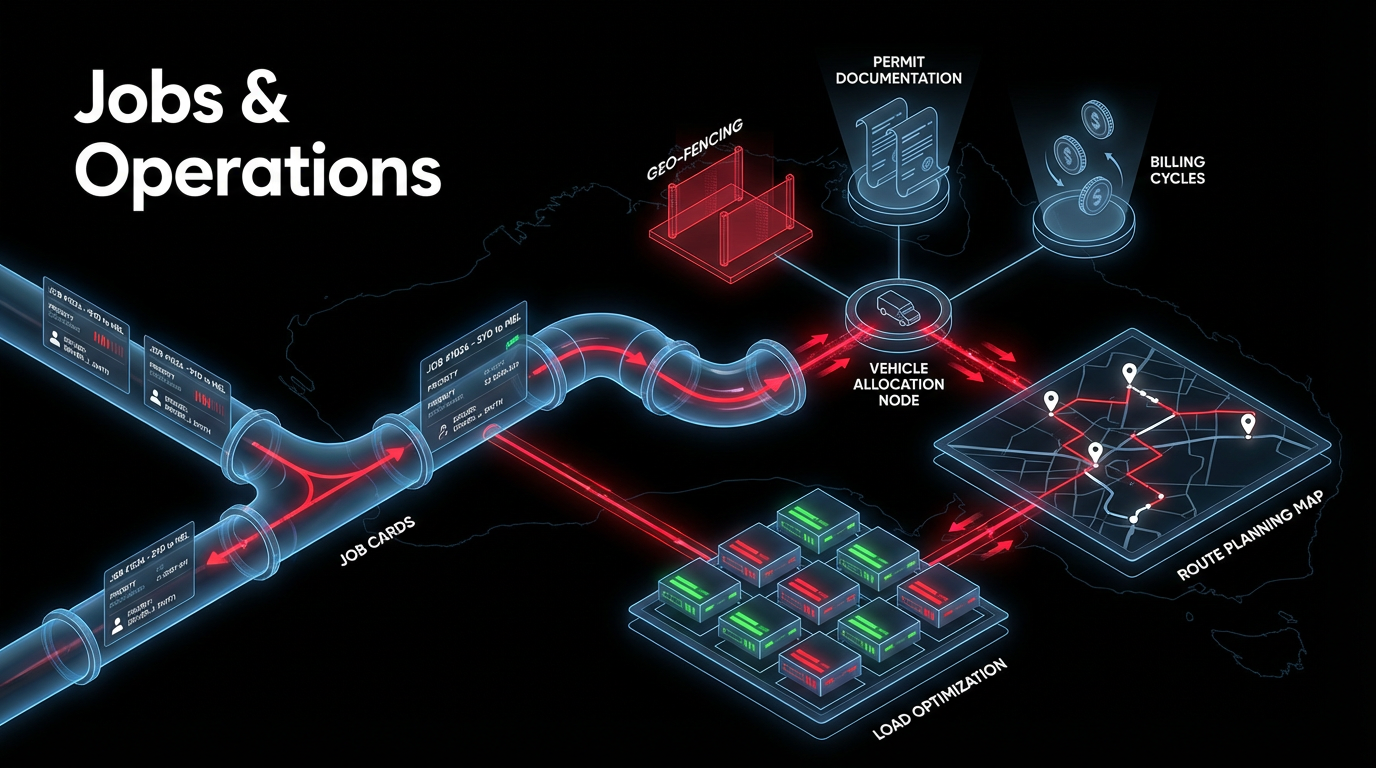
The Jobs and Operations Management module is the core engine of the FCX Operating System. It manages the complete lifecycle of transport and logistics jobs, from job creation and planning through to execution, monitoring and billing.
This module handles administrative jobs, manifest work, standard deliveries, dangerous goods jobs and ad-hoc requests within the same operational environment. Operators do not need separate systems or workarounds to manage different job types.
Complete operational control. Manage all job types in one system, reduce manual scheduling effort, improve route and load efficiency, increase visibility during execution and maintain stronger safety and compliance oversight across daily operations.
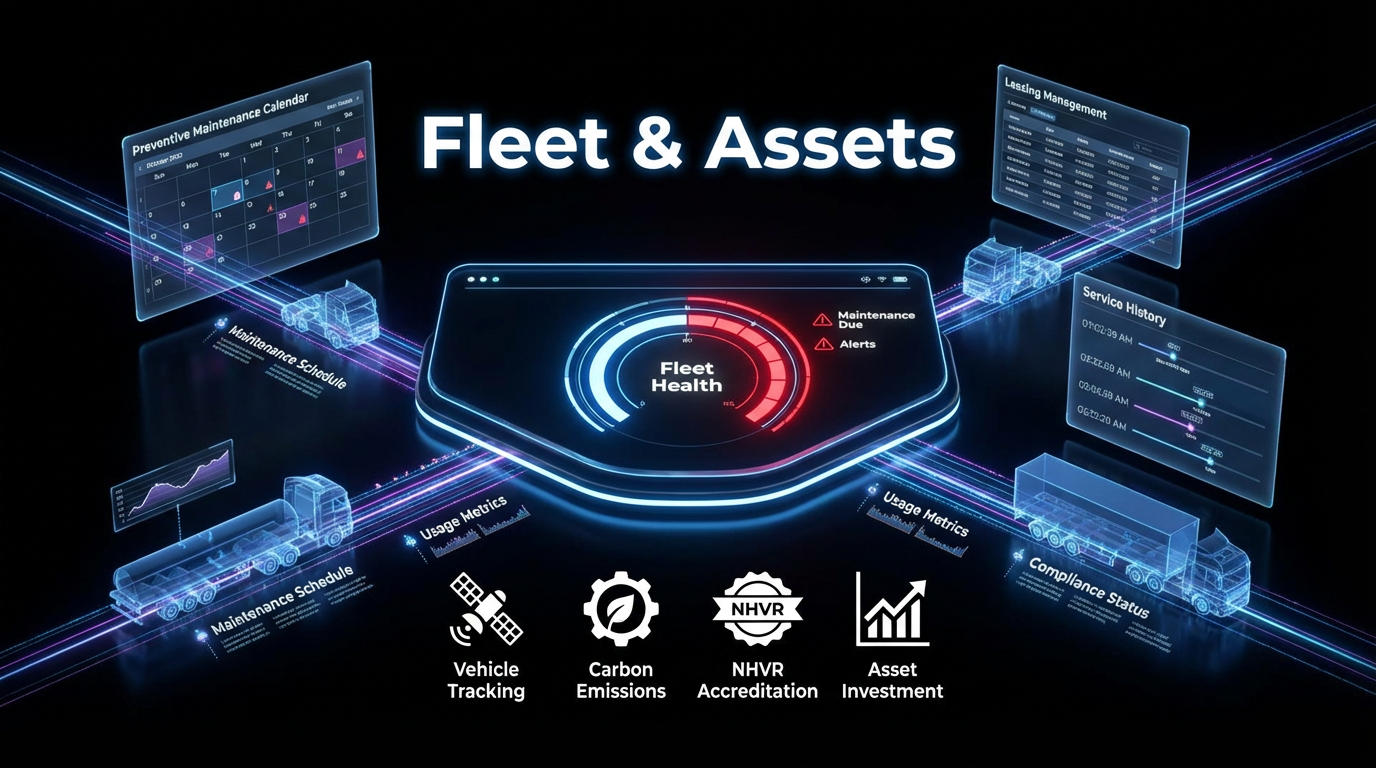
The Fleet and Asset Management module manages the full lifecycle of vehicles, trailers and operational assets across the business. It provides a centralised environment for tracking assets, monitoring usage, planning maintenance and managing cost over time.
Because this module sits inside the operating system, fleet availability is not treated separately from dispatch or maintenance. Vehicle availability, service history and compliance status can all be considered as part of how the business plans and executes work.
Improved fleet reliability, lower downtime, stronger asset utilisation and better long-term capital management. Businesses gain clearer visibility into true fleet cost and make better decisions about asset performance and replacement.
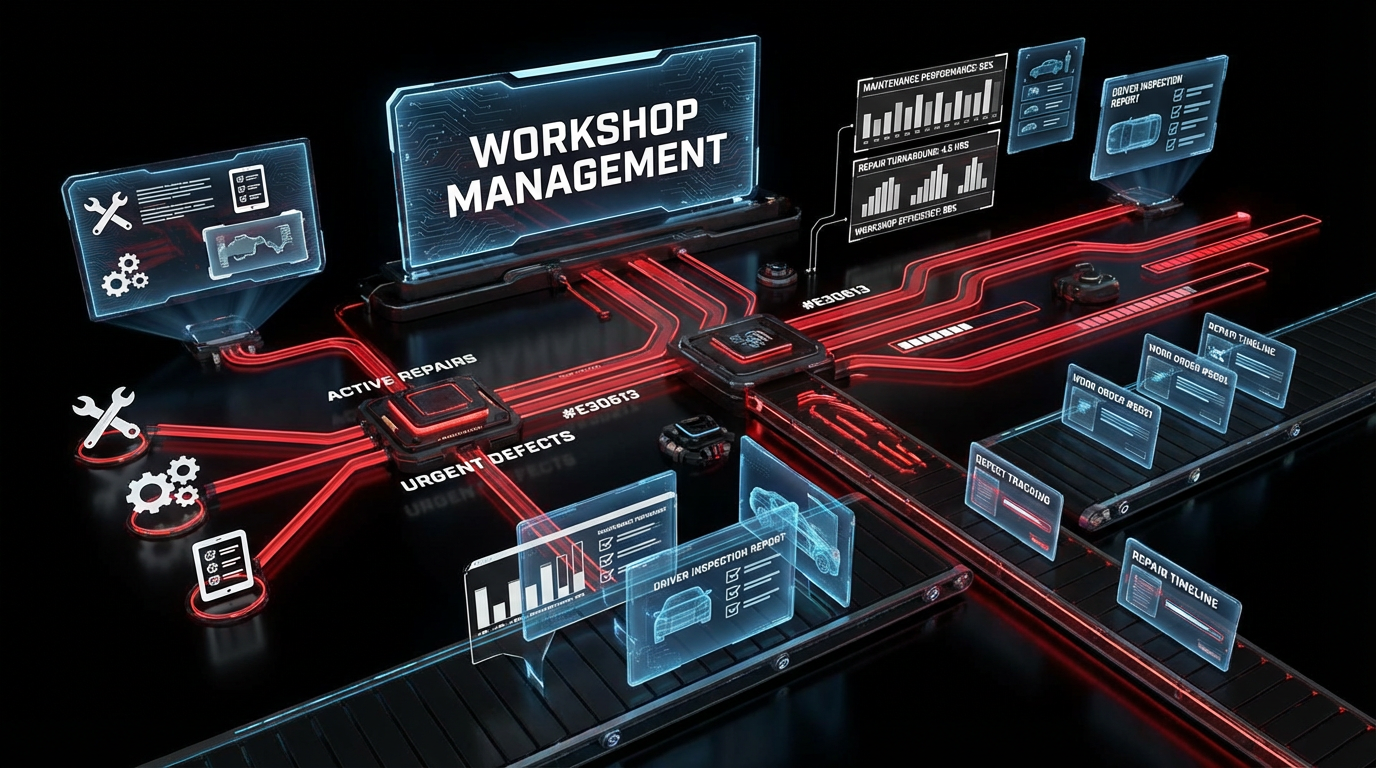
The Workshop Management and Mechanics Portal manages servicing, defects, repairs and maintenance workflows required to keep the fleet safe, compliant and operational. Workshop teams create and manage work orders, track maintenance activity, record defects and manage defect resolution in a structured way.
Defects identified in operations or through driver inspections can be passed directly into workshop workflows, ensuring that maintenance issues are not lost in disconnected communication or paper-based processes.
Stronger maintenance accountability and improved fleet availability. Businesses reduce the risk of defects being missed, improve repair turnaround times, strengthen vehicle safety and ensure workshop activity is directly connected to operational needs.
General Warehousing, Cross-Docking and Dangerous Goods
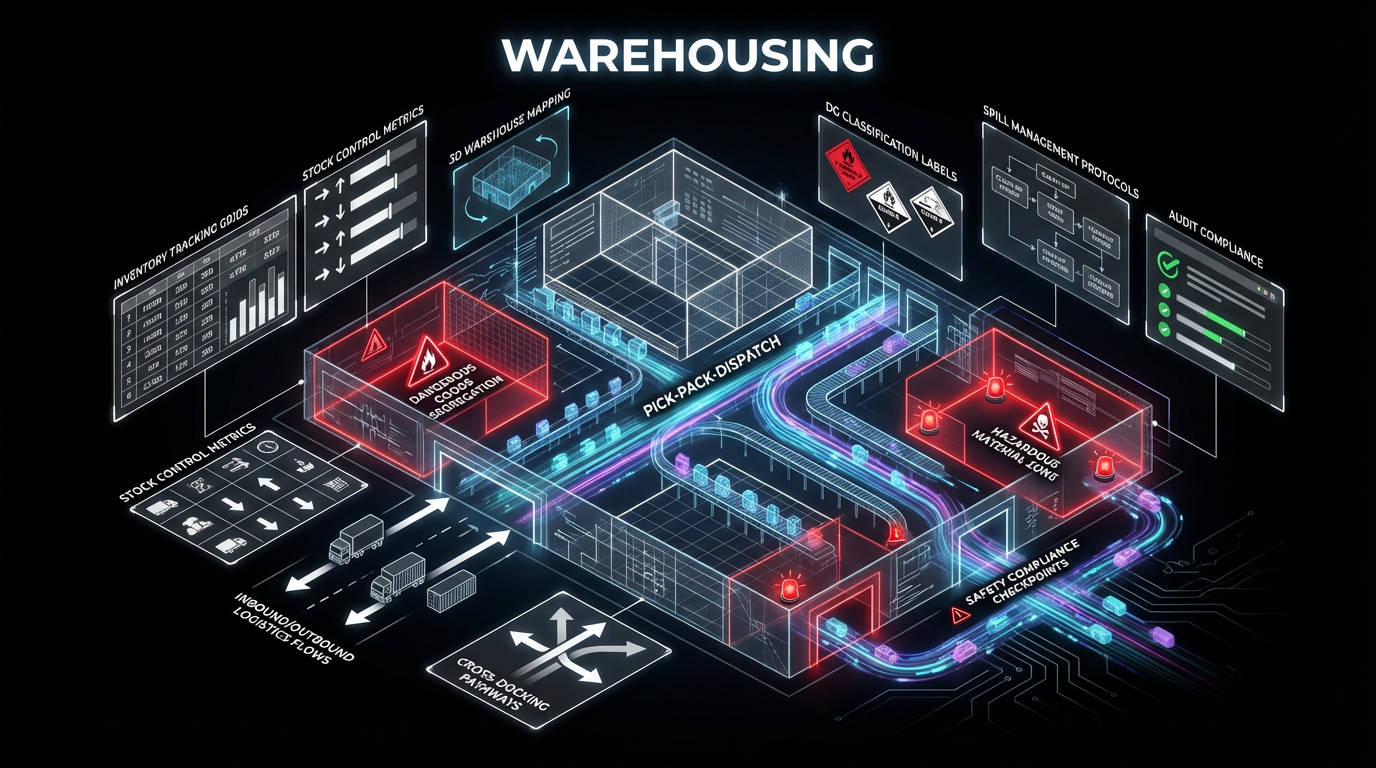
The Warehousing Management capability ensures that warehouse operations are fully integrated with transport execution. FCX is designed not only to manage truck movements, but to connect the full logistics environment from warehouse to final delivery.
The General Warehouse Management component supports warehouse location and zone management, inventory tracking, stock control, inbound and outbound logistics, pick-pack-dispatch workflows, cross-docking, warehouse performance analytics, stock reorder management and 3D warehouse mapping for maximum space utilisation.
The Dangerous Goods Warehouse Management component manages hazardous and regulated goods in accordance with safety and regulatory standards, supporting classification and segregation, compliance with storage regulations, safety documentation and audit reporting.
A more efficient, compliant and connected warehouse operation. Businesses improve inventory visibility, strengthen cross-docking coordination, reduce warehouse handling inefficiencies and improve dangerous goods compliance.
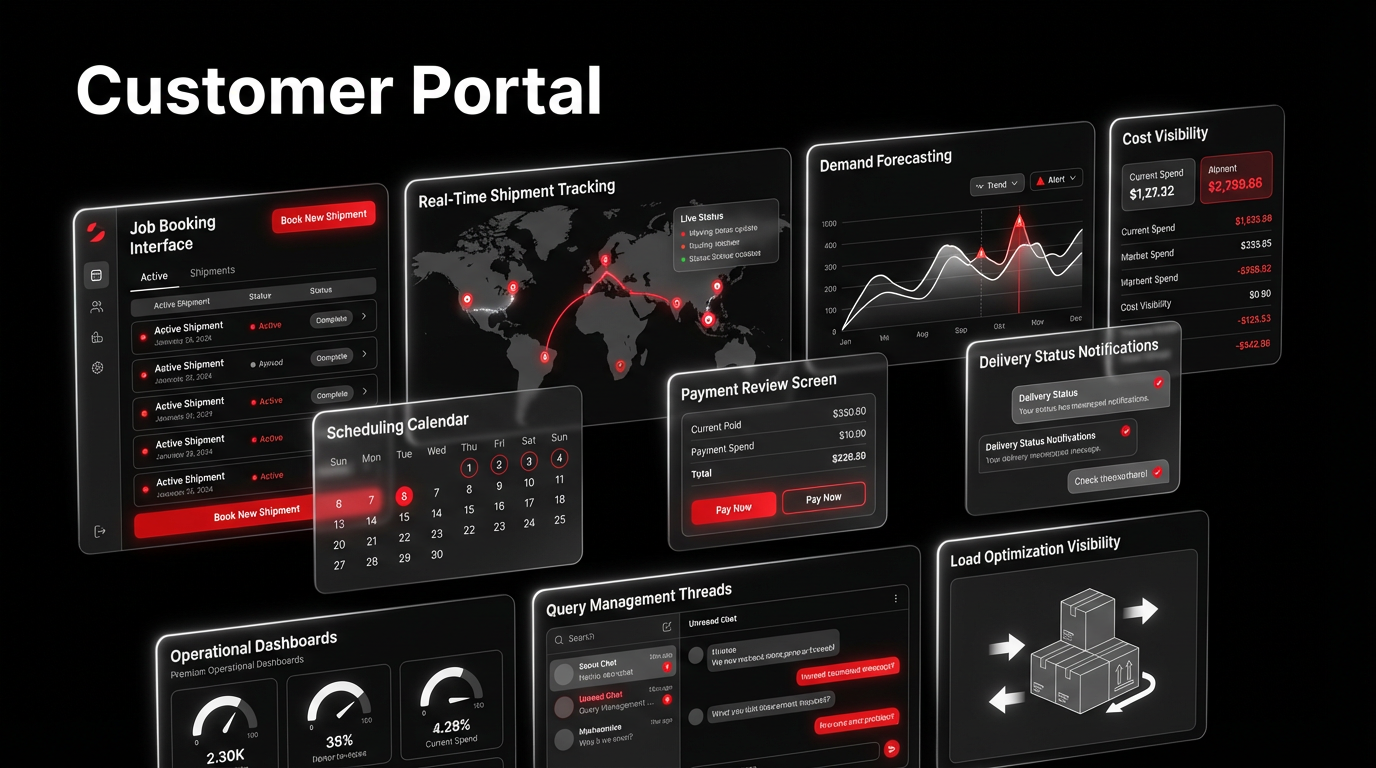
The Customer Portal gives customers direct visibility and controlled interaction with their transport and logistics activity. It provides a modern, structured digital interface between the operator and their customers.
Customers can make job bookings, schedule work, forecast demand, track jobs in real time and review costs before payment where applicable. Rather than relying on phone calls and email updates, customers can access the information they need through one consistent environment.
Better customer experience, stronger transparency and reduced administrative overhead. Businesses minimise inbound status queries, improve communication quality and create a more professional and scalable customer service model.
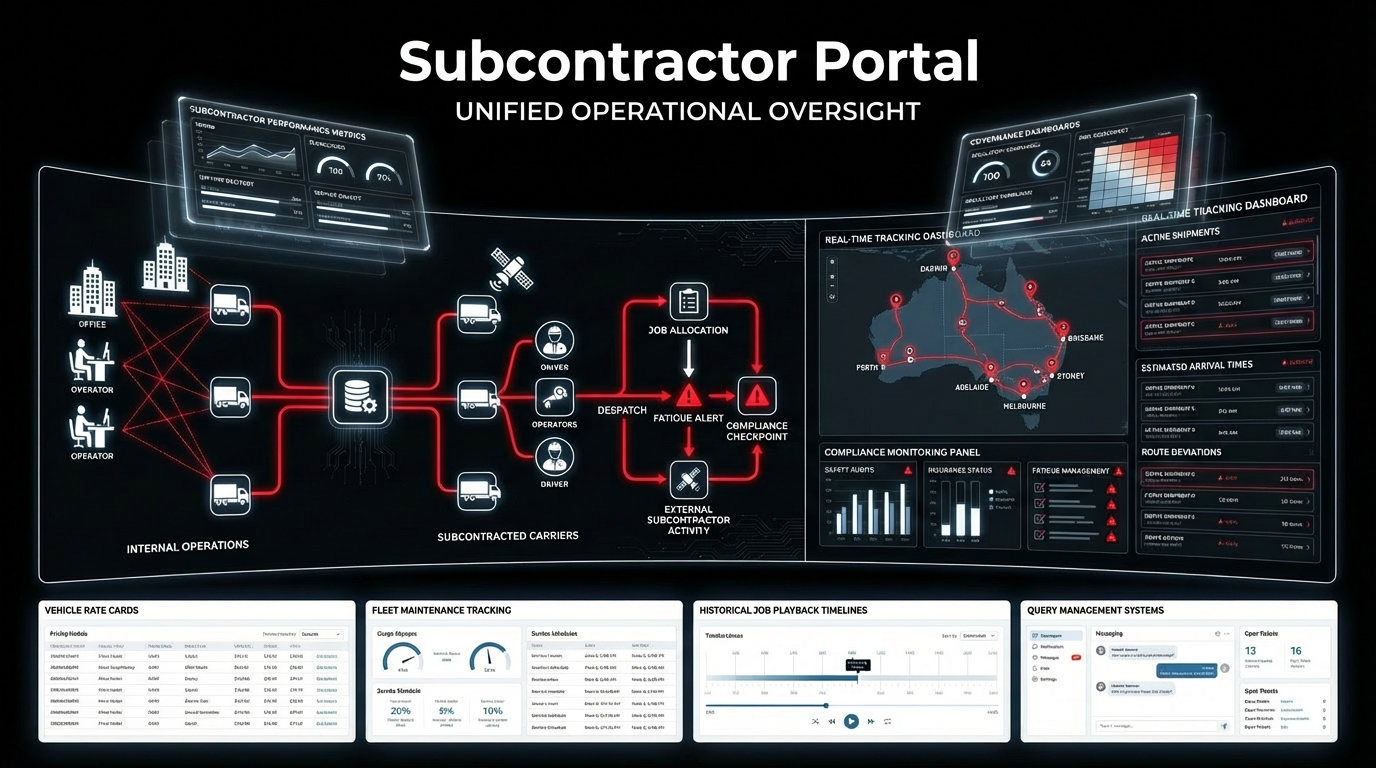
The Subcontractor Portal enables subcontracted work to be managed inside the same operating system as internal operations. This is critical for businesses that rely on subcontractors but still need visibility, control and compliance across outsourced activity.
This ensures that subcontractors are not operating outside the system, but as part of the broader operational and compliance framework.
Tighter control over subcontracted transport activity. Businesses improve visibility, strengthen cost governance, monitor subcontractor performance, reduce safety and compliance blind spots and ensure customer service consistency across internal and external delivery resources.
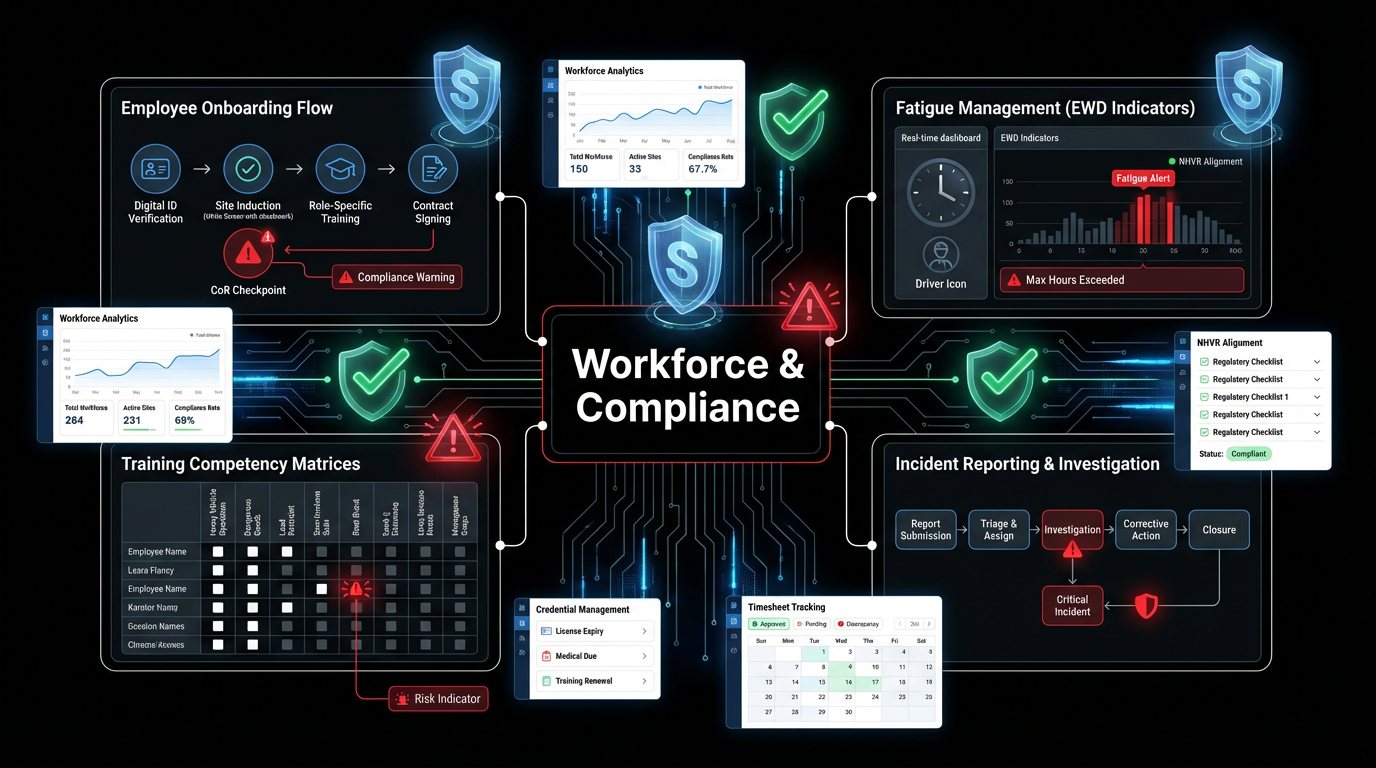
The Workforce, Safety and Compliance Management capability ensures that people, operational safety and regulatory obligations are actively managed inside the operating system rather than through disconnected HR, paper-based or spreadsheet-driven processes.
The Workforce Management component supports employee onboarding and offboarding, team communications, training and competency management, job requisitions, counselling and disciplinary management, timesheet management, incident and safety reporting, workforce analytics and payslip access.
The Site Induction component manages visitor invitation workflows, site induction compliance, credential generation, entry and exit tracking and related reporting.
Stronger workforce governance, safer operations and more reliable compliance management. Businesses improve training visibility, reduce safety blind spots, strengthen audit readiness and ensure compliance is part of operational execution rather than a separate afterthought.
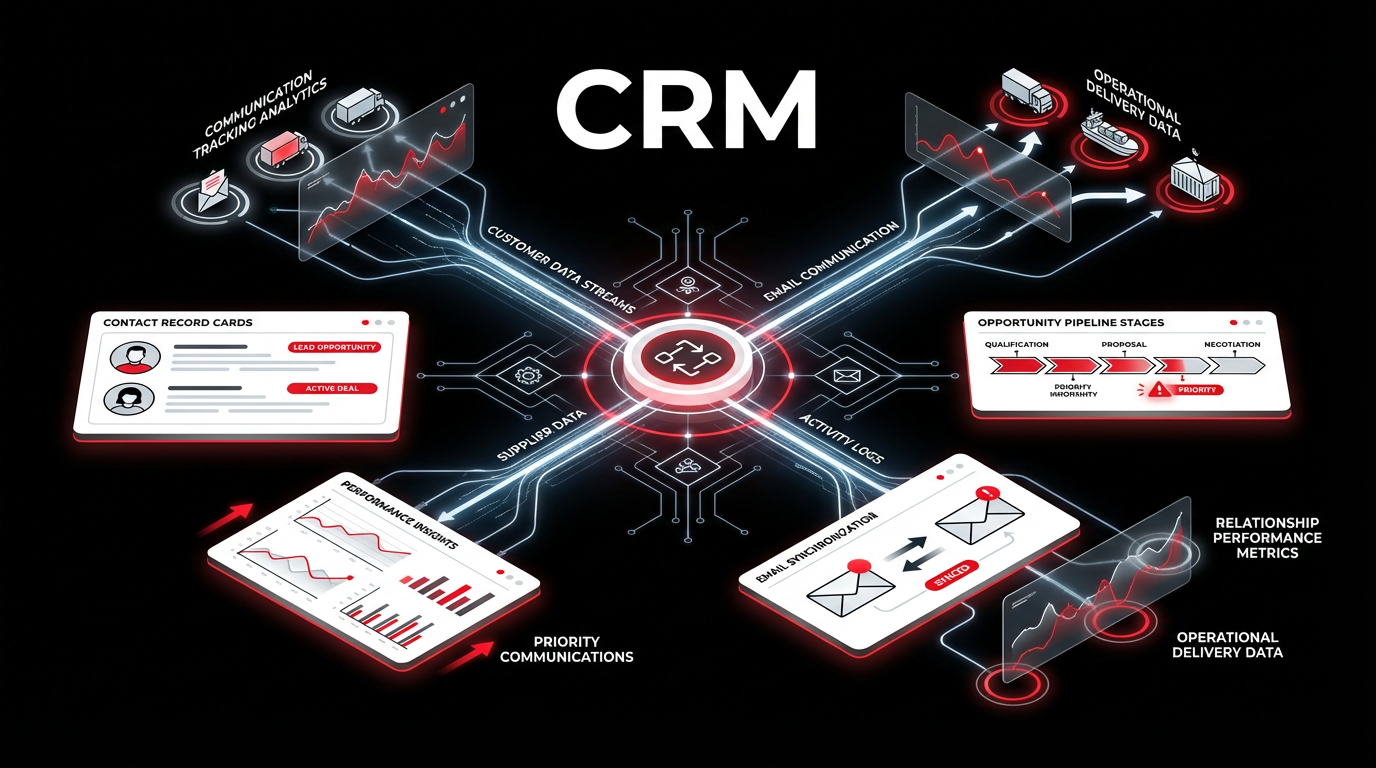
The CRM module centralises customer, supplier and relationship data so that communication and commercial management are connected to operational performance.
Because CRM sits inside the operating system, customer engagement can be viewed alongside actual operational delivery and service outcomes. Relationship management, business development and service performance data are not spread across disconnected inboxes or standalone CRM tools.
Stronger relationship management and improved commercial visibility. Businesses gain better insight into customer and supplier performance, improve communication consistency and reduce the risk of key relationship knowledge being trapped in individual staff members or disconnected systems.
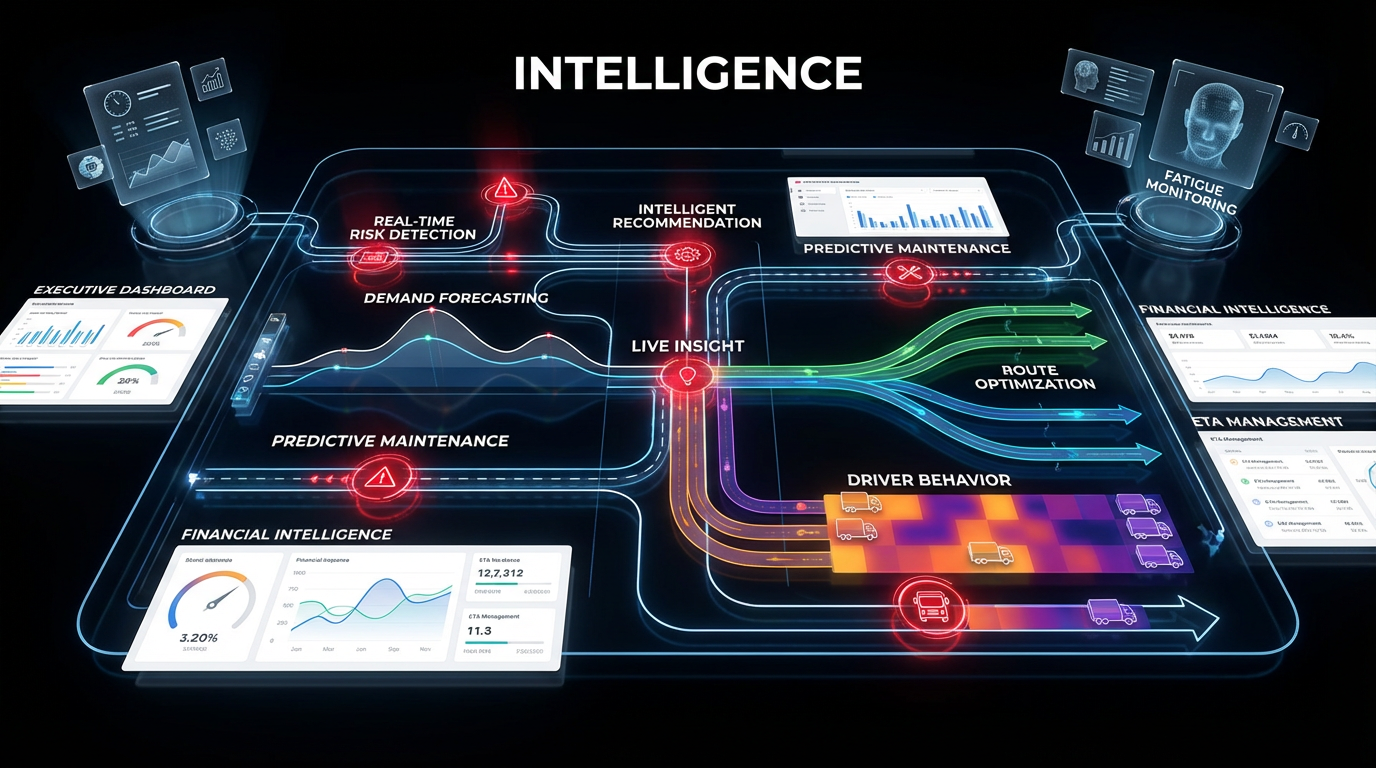
FCX Intelligence is the AI and machine learning engine embedded across the entire operating system. It continuously analyses data across jobs, dispatch, planning, fleet, warehousing, workforce, compliance, safety, customers and financial performance to deliver real-time operational intelligence.
AI insights are surfaced within the module and decision context where they are needed, not in a disconnected reporting interface. Within FCX Drive, AI also supports route navigation, ETA management, fatigue monitoring, incident detection, safety coaching, prompts and driver behaviour insight.
Faster, smarter and more proactive decision-making across the business. Operators improve planning, reduce inefficiencies, identify risk earlier, improve safety outcomes, optimise asset and workforce performance and gain stronger visibility into profitability and service delivery.
FCX Intelligence is not a separate application layered over the top of the business. It is embedded across the operating system itself. This means that intelligence appears where decisions are made, in dispatch, in fleet management, in warehouse workflows, in compliance oversight, in workforce management and in financial analysis.
This is what makes FCX different from systems that only provide reporting after the fact. FCX Intelligence actively supports the operation while the work is happening.
Explore FCX IntelligenceMost legacy systems were built to record information. FCX is built to run the business.
Most transport businesses still rely on fragmented tools for dispatch, fleet, compliance, warehouse operations and customer communication. FCX replaces that fragmentation with one connected operating system.
Because FCX connects operations, assets, people, customers, warehousing and intelligence into one environment, businesses can operate with greater visibility, stronger control and better decision-making.
Reduce fragmentation, improve data visibility, strengthen compliance and create more efficient workflows across the entire operation.
Stronger fleet reliability, more controlled maintenance, better job planning and improved warehouse coordination across the business.
Better customer service, tighter subcontractor governance, improved workforce oversight and smarter decisions through embedded intelligence.
FCX does not simply digitise existing processes. It transforms how the business operates.
Discover how FCX can replace fragmented systems with one intelligent operating system built for transport and logistics.